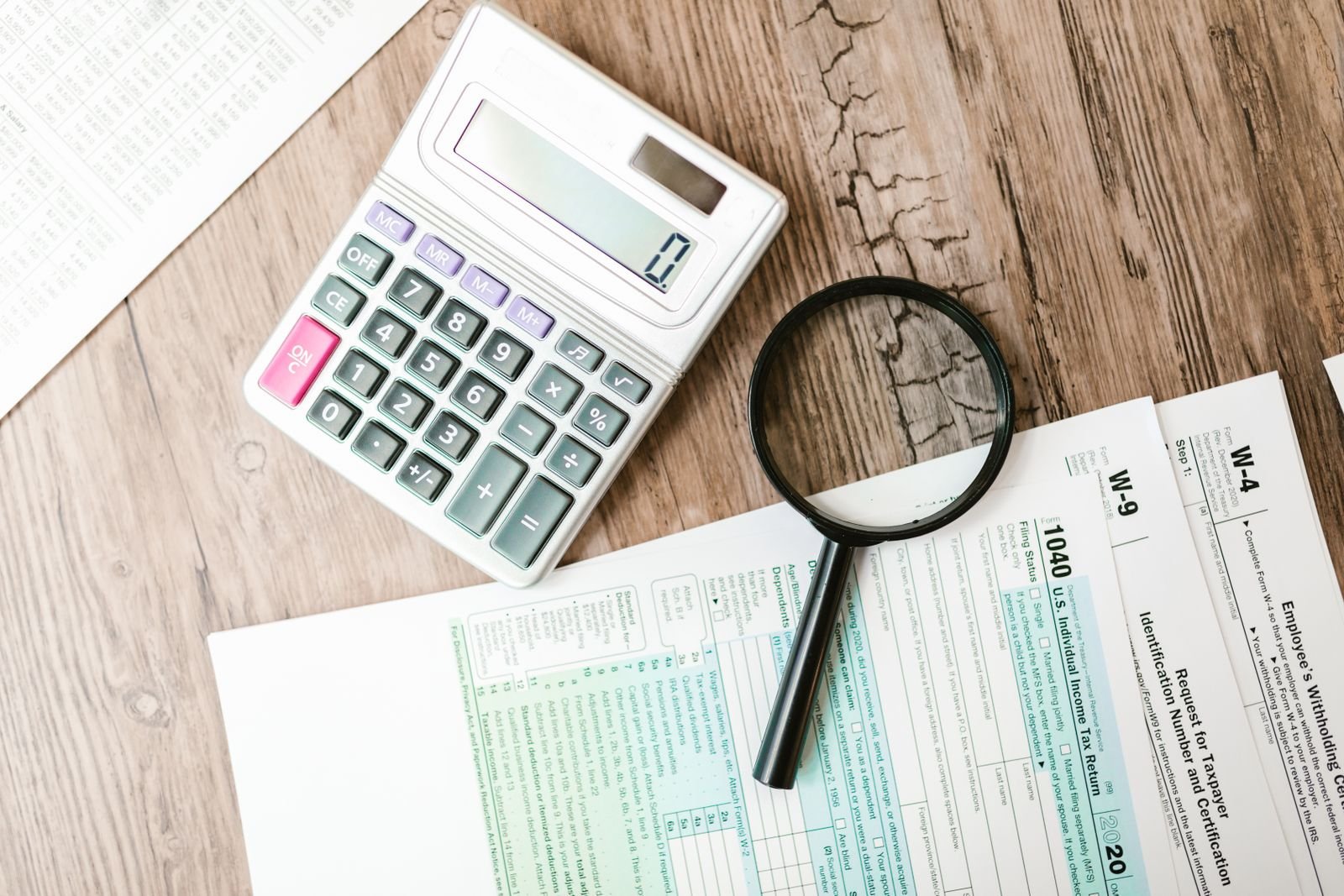
It’s late January. Your neighbor is staring at a shoebox of W-2s, 1099s and a daycare receipt she’s pretty sure matters.
She doesn’t want an app. She wants a person. Somebody local who knows what they’re doing and will sit down with her on a Saturday.
Every spring, millions of people go looking for that person. And every fall, the firms that hire them start recruiting.
That’s the window right now. If you want to become a seasonal tax preparer for the 2027 filing season, the clock is already running.
Some links in this article are affiliate links. If you buy through them, we may earn a commission at no extra cost to you.


This one’s for you if you’re good with numbers, you like helping people, and you want a side hustle that pays most of its money in a few busy months. I went through the IRS rules for preparers, three states’ licensing pages, the big chains’ hiring announcements, software pricing and the national fee survey. Here’s what it really takes, what it costs, and the order I’d do it in.
Here’s the line to remember: Learn it in winter. Earn it every spring.

Here’s what’s going on with seasonal tax prep work
The demand is steady, and it’s huge
Plenty of people still pay a pro. Through the week ending May 8, 2026, the IRS received 75.3 million e-filed returns from tax professionals, compared with 65.7 million that people prepared themselves, according to the IRS filing season statistics. Professional e-filings were up slightly from 74.9 million a year earlier. The average refund was $3,276, up from $2,939.
That’s why the chains are hiring now. On October 20, Jackson Hewitt announced it was seeking 15,000 seasonal employees nationwide for the 2026-2027 tax season, in tax prep, client support, sales and customer service. CEO Gregory Macfarlane said its tax pros “won’t stop until they’ve found every credit and deduction available to their clients.”
H&R Block is recruiting too. Its September 29 release, published via GlobeNewswire, says tax pro and client service roles are filled on a rolling basis and the in-demand ones fill quickly. “Our tax pros do more than just prepare a tax return, they build trusted relationships with our clients,” said Tony Bisbiglia, a vice president for its U.S. retail business.
The legal minimum is lower than most people think
Here’s what surprises people. At the federal level, there’s no license to prepare returns. You need a PTIN, a Preparer Tax Identification Number. The IRS PTIN page says, “Anyone who prepares or assists in preparing federal tax returns for compensation must have a valid 2027 PTIN before preparing returns.” It costs $18.75, it’s non-refundable, and most first-timers finish the online application in about 15 minutes.
The IRS also runs an optional credential called the Annual Filing Season Program. You complete 18 hours of continuing education, including a six-hour federal tax law refresher with a test, and agree to follow the IRS’s practice rules. In return you get listed in the IRS’s public directory of preparers, plus limited rights to represent clients whose returns you prepared and signed. The IRS is clear that it’s voluntary: “Anyone with a PTIN can prepare returns for compensation.”
But your state might want a lot more
This is where people get tripped up. A handful of states regulate preparers on top of the IRS.
California requires registration with CTEC. According to CTEC’s guide, that means a Live Scan background check, a 60-hour qualifying course from an approved provider, a $5,000 surety bond, a PTIN, and a $100 application fee plus a $2 processing fee. The new-preparer cycle opens November 1 each year, and the background review typically takes two to eight weeks.
New York requires registration if you’re paid to prepare a substantial part of any New York return. Commercial preparers, those doing 10 or more New York returns, pay $100 and first-timers complete a 16-hour qualifying course, per the state’s registration page. Skipping registration can cost $250 per calendar year.
Oregon goes further. Its Board of Tax Practitioners requires 80 clock hours of board-approved tax law education, a passing score of 75% on its exam, and a license. And “a tax preparer must work under the supervision of a licensed tax consultant,” a CPA, a public accountant or an attorney.
| Where | What you need | Listed cost |
|---|---|---|
| Federal (everyone) | Valid 2027 PTIN | $18.75 |
| Federal (optional) | Annual Filing Season Program: 18 hours CE incl. 6-hour refresher and test | Set by course provider |
| Federal (to e-file yourself) | IRS e-file application and suitability check; up to 45 days | No fee listed on the IRS page |
| California | 60-hour course, $5,000 bond, Live Scan, CTEC registration | $100 + $2 application, plus bond and course |
| New York | Registration; first-time commercial preparers take 16-hour course | $100 (commercial) |
| Oregon | 80-hour course, 75% on state exam, work under supervision | See board’s fee page |
Sources: IRS PTIN, IRS AFSP, IRS e-file, CTEC, New York, Oregon OBTP. Check your own state; this is not a full list.
What the pros actually charge
Now the money side. The National Association of Tax Professionals’ 2025 Fee Study highlights found that the few preparers who charge a set hourly rate averaged $182 an hour, with half falling between $129 and $250. Most price by the form instead. CPA Trendlines reported that NATP’s average base charge for a Form 1040 with schedules was $236, up from $162 in the 2024 study.
Two more numbers from that survey jump out. Respondents earned 64% of their gross revenue during tax season, February through April. And 87% of their clients were returning clients. That’s the business in two stats: it’s seasonal, and it’s sticky.
One honest note. Those NATP respondents are mostly seasoned practice owners; nearly 60% have 21 or more years in the business. A first-year preparer at a chain isn’t billing $236 a return. You’re learning on their dime, and that’s the point.
Here’s my take on becoming a seasonal tax preparer
Okay. Real talk.
I like this side hustle more than most of what gets hyped online. It’s not glamorous. Nobody’s going viral doing a 1040. But look at what you’re actually building: a skill people need every single year, by law, with clients who come back 87% of the time. That’s not a gig. That’s a book of business.
And the schedule fits a side earner. Jackson Hewitt’s careers page pitches “Days or nights or weekends, part-time or full-time, and your summers off.” You put in a hard few months, then you’ve got the rest of the year back.
Here’s the part I want you to hear, though. This is a trust business. You’re signing your name and your PTIN on somebody’s federal return. The IRS calls a preparer who won’t sign a “ghost” preparer and lists it among its 2026 Dirty Dozen scams, calling a missing signature or PTIN a “major red flag.” Don’t be the cousin who does returns for cash and leaves the preparer line blank. Do it right or don’t do it.
And don’t go solo on day one. I’d spend year one learning inside a firm or a volunteer program, where someone reviews your work. Then, if you love it, go independent in year two or three with real experience and a few clients who already trust you.

What you actually need (and what it costs)
Prices from official pages, checked today:
- A PTIN: $18.75 at the IRS, renewed every year. Non-negotiable.
- Training: Jackson Hewitt offers a Fundamentals of Tax Preparation course in person, virtually or online depending on location. Its careers page says “Cost varies by location,” and you could be reimbursed for certain classes. Ask your local office before you assume it’s free.
- Free practice: The IRS’s VITA and TCE volunteer programs train volunteers online and in the classroom, then put them at sites that are “generally open nights and weekends.” You prepare free returns for low-to-moderate income families. No pay, but real reps and real review.
- Software, if you go independent: Drake’s pricing page lists a Pay-Per-Return package with 10 individual returns for $379.99, then $49.99 per extra individual return. Its 1040 package with 150 returns is $1,895 with a discount that runs through November 30, then $1,995.
- State costs: In California, the bond, the 60-hour course and the $102 in CTEC fees. In New York, $100 for commercial preparers. Check your state first.
- A simple booking setup: once you have your own clients, a one-page site and online scheduling. I’d put the site on Hostinger web hosting and handle booking, reminders and missed-call text-back in GoHighLevel. Here’s how I’d automate missed calls, texts and booking so no client slips through in March.
If you start with a chain, your out-of-pocket can be as low as the PTIN plus any course fee. Going independent in a regulated state costs a lot more up front.
How I’d play it
If I were starting today, November 25, aiming to prepare returns this coming season, here’s my order.
Step one: check your state’s rules tonight. Before you spend a dollar, find out whether your state registers or licenses preparers. California, New York and Oregon are three that do, with very different rules. If you’re in Oregon, for example, the 80-hour course and exam come first, and you’ll need a supervisor. Ten minutes on your state tax agency’s website saves you from building on the wrong foundation.
Step two: get your 2027 PTIN. Go to the IRS’s online system, pay the $18.75 and get it done. It’s the one thing every path requires, and the IRS says it takes most people about 15 minutes online. The paper route takes about six weeks, so don’t go paper.
Step three: apply to a firm now, not in January. Jackson Hewitt is hiring 15,000 seasonal workers and H&R Block fills roles on a rolling basis. Apply to both, plus any local independent office. Ask three questions in the interview: Is the course free or reimbursed? Who reviews my returns? How is pay calculated? Get the answers in writing.
Step four: take the training seriously, then go deeper. Do the firm’s course, then consider the IRS’s Annual Filing Season Program for the 18 hours of continuing education and the directory listing. It’s optional, but it tells clients you’ve done more than the minimum.
Step five: learn the due diligence rules cold. The credits families care most about carry the biggest risk for you. The IRS’s Form 8867 page says the penalty for returns filed in 2026 is $650 for each failure to include the due diligence form when it’s required. It covers the earned income credit, the child tax credit, the education credit and head of household status. Ask questions, document the answers, every time.
Step six: build your list from day one. NATP’s survey says 87% of clients come back. So treat every client like a future repeat. Keep a simple list of everyone you help (with permission), send a thank-you note, and reach out next January. If you’re working inside a firm, follow its client rules. If you’re independent, this list is your business. It pairs well with the year-end tax moves for freelancers I’d share with self-employed clients.
Step seven: decide about year two in May. When the season ends, look at your numbers. If you loved it, that’s when you apply for an IRS e-file authorization, which can take up to 45 days per the IRS e-file provider page and includes a background check and fingerprinting for non-credentialed applicants. Price out software, set up your booking, and go independent with experience behind you.

Watch-outs
Don’t treat the course as a job offer. A course is training. Ask up front what happens after you finish, and don’t assume you’ll be placed.
Don’t promise refunds. The fastest way to lose a client’s trust, and invite trouble, is promising a number before you see the paperwork. Promise accuracy. That’s it.
Don’t guess on credits. At $650 per failure, due diligence penalties add up fast, and they land on the preparer. If something doesn’t add up, ask more questions or pass it to someone more experienced.
Don’t ignore your own taxes. If you go independent, you’re self-employed. Learn how the 2027 tax brackets affect side income and set money aside from every payment.
Don’t expect year-round money. NATP’s respondents earned 64% of revenue in February through April. Budget for the quiet months, or pair this with another off-season hustle. Here are the side hustles working in late 2026 if you want a second lane.
Quick answers
Do I need a degree? The IRS requires a PTIN, not a degree. Some states add education and exams. Firms set their own hiring rules.
Can I do this remotely? Jackson Hewitt says its training is offered in person, virtually or online depending on location. Whether the job itself is remote depends on the office.
Is this the same as being a CPA or enrolled agent? No. The IRS says attorneys, CPAs and enrolled agents are the only preparers with unlimited representation rights. A seasonal preparer with a PTIN prepares returns; representation is limited.
The bottom line
Becoming a seasonal tax preparer isn’t flashy, and it isn’t easy money. It’s a real skill with a low federal barrier, state rules you have to respect, and a client base that comes back year after year. The chains are hiring right now. The PTIN takes 15 minutes. The window is open.
Start inside a firm or a volunteer site. Learn the rules, especially the due diligence rules. Keep track of every person you help. Then decide whether year two is the year you hang your own sign.
Learn it in winter. Earn it every spring. That’s the play.
And when you’re ready to run your own seasonal practice, with online booking, reminders and follow-up that brings clients back next January, that’s exactly what we built at The American Side Hustle. Funnels, automated follow-up and text-to-pay in one place. Earn in USD. Live anywhere.
Tools I’d use for this
- GoHighLevel: online booking, appointment reminders and missed-call text-back for a busy tax season.
- Hostinger: affordable hosting for a simple one-page site that tells locals who you are and how to book.
- Kit: a free email list so last year’s clients hear from you before next season starts.
Some of these are affiliate links. If you sign up through them we may earn a commission, at no extra cost to you. See all our picks on the Recommended Tools page.
Photos: RDNE Stock project and kaboompics on Pexels. Graphics: The American Side Hustle. Prices checked on official pages Nov. 25, 2026, and may change.
Ready to build your own American side hustle?
Get funnels, automated follow-up, text-to-pay and courses in one dashboard. Earn in USD, live anywhere.