




It’s Sunday night. You just finished a 40-minute video. Lighting dialed in, story tight, edit clean.
You upload it to YouTube. Then you think, “Should this go on Instagram too?”
Until a few weeks ago the answer was easy: no. Now Instagram is asking for it, and paying a few creators six figures to say yes.
Some links in this article are affiliate links. If you buy through them, we may earn a commission at no extra cost to you.
This one’s for you if you’ve been trying to figure out how to make money on Instagram in late 2026, and every headline seems to say something different. Instagram wants long videos. Instagram is paying YouTubers. Instagram is selling paid plans. So what actually pays a regular creator right now? I read the announcements, the surveys and the skeptics. Here’s the real picture.



Short version, so you remember it: Rent the reach. Own the income.

Here’s what’s going on with Instagram and long videos
Instagram spent years telling everybody it was a short-video app. Now it’s testing the opposite.
Features: videos up to 90 minutes (October 26)
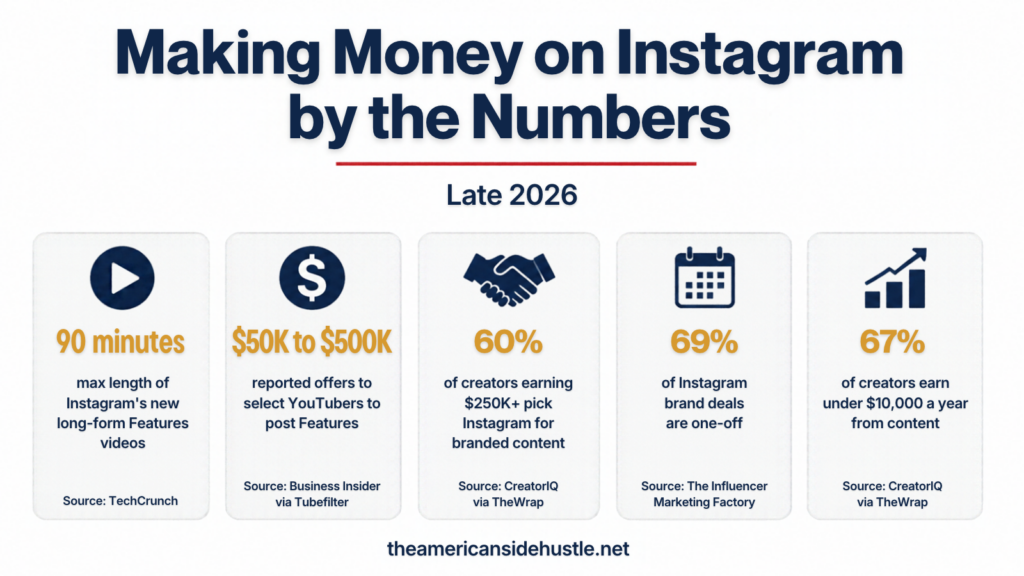
On October 26, Instagram announced a new upload type called “Features”: horizontal videos up to 90 minutes long. A companion tool called “Clips as Reels” lets creators cut a long video into Reels that link back to the full thing. The test started in Brazil and is expanding to a small U.S. group, TechCrunch reported.
The wild part is who said it. Instagram head Adam Mosseri admitted, “For a long time, I have been against doing long-form video on Instagram.” His reasoning was always that short Reels drive more shares and DMs. Now he says the goal is for short and long video to be “symbiotic,” and that Instagram is “very committed to it long term.”
The details matter. Creators can link up to eight Reels to one longer video, and Instagram is pitching the format for podcasts, vlogs and interviews, according to Social Media Today. For context, Reels used to favor videos under 90 seconds, and Instagram’s TV app is now on Apple TV in the U.S., The National reported.
Tessa Lyons, Instagram’s VP of product, put the strategy plainly to The National: “we know that to do that well, we need more than just short-form video.”
The money: up to $500,000, but only for a hand-picked few
Three days later the checkbook came out. Business Insider reported that Instagram approached “select” YouTubers with offers starting at $50,000, some six-figure offers, and a top offer of $500,000, as Tubefilter summarized. The reported terms: post your long video as a Feature the same day it goes up on YouTube. No exclusivity required. Nobody has said whether that money is per video, per month or a flat fee.
A Meta spokesperson confirmed it: “We’ve been public about the fact that we are funding Features content directly with some creators right now to support them.” The same statement said it’s “too early to share a long-term monetization model.”
Mosseri addressed it on X on October 28:
“We understand the economics matter a ton, and are exploring multiple options to help long-form creators get paid.” (Adam Mosseri, via Tubefilter)
This is a familiar move. In January 2025, Instagram was reportedly offering big TikTok creators up to $50,000 a month to post on Reels, plus a “Breakthrough Bonus” of up to $5,000 over three months for new Reels creators, per Tubefilter’s report on The Information’s story.
What Instagram itself admits about paying creators
Here’s the line that matters. In the same TechCrunch piece, Mosseri said Instagram pays creators mainly through brand deals, some creators earn from fans, and Instagram’s small performance-based program costs more than it earns. Compare that with YouTube, where Partner Program creators get 55% of the ad revenue from their videos.
The gap shows up in the estimates. vidIQ’s analysis, cited by Social Media Today, puts YouTube long-form pay at roughly $1 to $10 per 1,000 views, while Instagram’s views-based pay is “effectively zero” unless a brand deal is attached. For top creators with a million-plus subscribers, vidIQ estimates about $50,000 a month on YouTube against $5,000 to $15,000 on Instagram on average.
Meanwhile, the stuff that actually pays today
Instagram’s own earn-money page lists six tools: Creator Marketplace (brand deals), bonuses, Subscriptions, Gifts, Partnership Ads and Badges. Here’s what’s verifiable about each one, plus the newest addition.
| Way to earn | Who can use it | What we know |
|---|---|---|
| Brand deals | Anyone a brand will pay | Median nano-creator Reel: $250 (Aspire) |
| Amazon affiliate links | Eligible creators | Up to 30 products per Reel; Instagram takes no cut |
| Subscriptions | 18+, more than 10,000 followers | Eight monthly price points, $0.99 to $99.99 |
| Gifts | 18+, 5,000 followers, pro account | Fans buy Stars to send virtual gifts |
| Bonuses | Not listed publicly | Pays on Reels, carousel and photo performance |
| Features deals | Hand-picked YouTubers | Reported $50,000 to $500,000 |
Sources: Instagram Creators, Aspire (June 2, 2026), TechCrunch (Nov. 16, 2026 and July 24, 2023), Meta for Creators (Nov. 6, 2023), Tubefilter (Oct. 29, 2026). Eligibility can change, so check your Professional Dashboard.
A few notes on that table. The Subscriptions rules come from TechCrunch’s 2023 report on the expansion, and subscribers get things like subscriber-only Lives, Stories and a badge, according to Meta’s launch page. The Gifts threshold of 5,000 followers comes from Meta’s 2023 creator post. Meta’s own Gifts announcement tells you to check eligibility in your Professional Dashboard, and I’d trust that over any blog number, including mine.
The affiliate piece is the freshest. On November 16, Instagram started letting eligible creators tag Amazon products in Reels and feed posts, with no commission taken by Instagram, and it says those product links get “about twice as many clicks” as bio links, TechCrunch reported. I broke that one down step by step in my guide to Amazon affiliate links in Instagram Reels, so I won’t repeat it here.
Here’s my take on how to make money on Instagram right now
The $500,000 headline is real. It’s also not for you. Those offers went to a hand-picked group of established YouTubers so Instagram has something worth watching when Features opens up. That’s a launch budget, not a business model.
Instagram is the best place on the internet to get discovered and one of the weaker places to get paid directly. Both things are true at the same time.
The creators themselves are saying it. In a Shine Talent Group survey of 50 creators, 93% said Instagram would need to change its revenue policies before they’d post long-form there, Digiday reported. Digital strategist Gabriella Zutrau said Instagram appears to be “offering discoverability as a form of payment.” Mustafa Aijaz, a VP at SoaR, said he’ll post there, but “I’m not making content for Instagram at this moment in time.”
And Instagram has tried this before. As Social Media Today pointed out, its first long-form app, IGTV, launched in 2018 and shut down in 2022.
So why am I not writing Instagram off? Because brands still pay there. A CreatorIQ survey of 5,095 creators found that 60% of creators earning more than $250,000 a year named Instagram as their main platform for branded content, versus 30% for TikTok, TheWrap reported. And 38% ranked Instagram No. 1 for building a long-term creator business.
The same survey has the reality check, too. 67% of creators earn less than $10,000 a year from content, and 62% say it isn’t their main income. That’s the honest middle of this industry.
Here’s how I read all of it:
- Reels are your billboard. Instagram has 3 billion monthly users, and Mosseri says almost all its recent growth came from “DMs, Reels, and recommendations.” That’s reach you can’t buy this cheap anywhere else.
- Brands are the paycheck. Instagram said so itself. Plan around brand deals and affiliate links, not views.
- Your own offer is the business. The stuff you own, like an email list, a product or a service, is the only part Instagram can’t change on a Tuesday.
That’s the whole idea behind “rent the reach, own the income.” Instagram is renting you an audience of billions. Great deal. Just don’t build your house on rented land.
What you actually need (and what it costs)
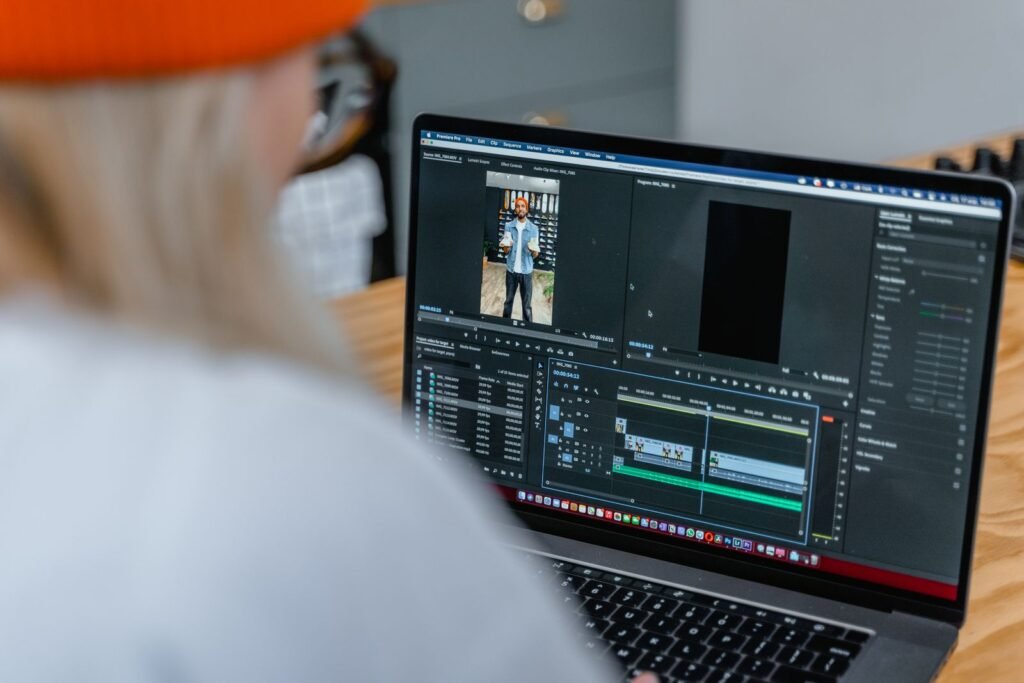
The good news: the core tools are free. Here’s the kit, with prices from the official pages as of today.
- Instagram’s own creator tools: free. Trial reels show a Reel to non-followers first, give you views, likes, comments and shares after about 24 hours, and can auto-share to your followers if it does well in the first 72 hours. In a Mosseri post on the Instagram blog, Instagram said that out of 400,000-plus creators it studied, 40% started posting Reels more often after trying trial reels, and 80% of those saw more reach from non-followers. Instagram also says “performance is not guaranteed,” which I appreciate.
- Edits: free. Instagram’s editing app added in-video links to other Reels or accounts (not outside websites), 10 custom clip ideas a week and 25 new effects, Social Media Today reported.
- Meta One: optional, and not cheap at the top. Since September 15, Meta has sold paid plans. Instagram Plus is $3.99 a month, and creator and business bundles start at $14.99 (Essential), $49.99 (Advanced), $149 (Expert) and $499 (Max), per Meta’s announcement. TechCrunch reported that Advanced includes links in organic posts and Reels, story scheduling up to 30 days ahead and exportable analytics. Meta says the core app stays free.
- A clipping tool for long videos: free to about $35 a month. If you’re going to play the Features game, you need to turn one long video into eight Reels. Descript has a free plan, and its Hobbyist plan is $16 a month billed yearly ($24 month to month), with the Creator plan at $24 yearly ($35 monthly), per its pricing page. Its AI “Create Clips” tool is included on paid plans.
My honest advice on Meta One: don’t buy a $49.99 plan until you know a link in your Reels is worth more than $49.99 a month to you. Test free first. Pay when the numbers tell you to.
How I’d play it
If I were starting or restarting on Instagram today, here’s the order I’d do it in.
Step one: post Reels with a job to do. Every Reel should either grow the audience or move someone toward something you sell. Use trial reels to test new ideas on strangers before your followers see them. It’s free market research.
Step two: make everything original. Since April 30, accounts that mostly repost other people’s content can’t be recommended, and that now covers photos and carousels, not just Reels, TechCrunch reported. Slapping a watermark on someone else’s clip or speeding it up doesn’t count. Your face, your voice, your take. That’s the moat.
Step three: if you already make long videos, cross-post them as a test. You don’t need a $500,000 deal to try this when Features reaches you. Post the full video, cut it into up to eight Reels that link back, and watch whether those Reels pull people into the long version. If you’re on YouTube, keep YouTube first. It still pays per view and Instagram doesn’t, and the YouTube Partner Program changes coming in February are worth planning around too.
Step four: get your brand-deal kit ready before November ends. Instagram brand collaborations peak in November at 9.9% of the year’s volume, and Q4 carries 29% to 31% across platforms, according to The Influencer Marketing Factory’s 2026 report. Build a one-page media kit with your reach, audience and three best Reels. For pricing, Aspire’s survey of about 1,200 creators found a median Reel rate of $250 for nano creators (most fall between $150 and $400). Niche matters: home design creators had a median of $1,500, pet creators $1,000 and travel creators $750.
Step five: pitch for the second deal, not just the first. That same report found 69% of Instagram brand deals are one-off. So after every campaign, send the brand a short results recap and a proposal for a three-month package. Repeat clients are where creator income gets steady.
Step six: add affiliate income on top. Tag products you actually use in Reels and posts. If you sell your own stuff, like templates or digital downloads, the same logic applies. I covered the holiday angle in my Cyber Week playbook for digital products and print on demand.
Step seven: move followers somewhere you own. This is the “own the income” part, and it’s the step most creators skip. Put an email signup in your bio and in your DMs. A newsletter tool like Kit works for this. Then offer something real: a service, a product, a paid community. If the algorithm changes tomorrow, your list doesn’t.
Watch-outs
Disclose every deal, every time. The Influencer Marketing Factory found 61% of sponsored Instagram posts had no visible disclosure label. Don’t be part of that number. The FTC says to disclose any financial, employment, personal or family relationship with a brand, put the disclosure on screen or in the audio for videos, and use clear words like “ad” or “sponsored,” not vague ones like “collab,” per its Disclosures 101 guide.
Don’t build your plan on a bonus. Bonuses and paid deals come and go. Meta’s Facebook side runs the same playbook: its Creator Fast Track pays $1,000 a month to creators with 100,000-plus followers on Instagram, TikTok or YouTube (or $3,000 for a million-plus), but only for three months, Tubefilter reported. A Meta spokesperson called those payouts “a sweetener entry point.” Take the sweetener if it’s offered. Just don’t count on it in February.
Watch out for “I’ll get you monetized” sellers. You can’t buy your way into Features deals, bonuses or Gifts eligibility. Instagram’s real eligibility lives in your Professional Dashboard.
Quick answers
Does Instagram pay per view like YouTube? Not in any broad way right now. Instagram has said its main creator income comes from brand deals, and that a long-term monetization model for long videos isn’t ready yet.
How many followers do I need to make money on Instagram? For brand deals and affiliate links, there’s no magic number. Brands pay for the right audience. Gifts and Subscriptions have follower minimums, so check your Professional Dashboard for your account.
The bottom line
Instagram’s long-video push is real, and the paid deals are real. But they’re aimed at a small group of big creators while Instagram figures out how to pay everyone else. For most of us, the money on Instagram still comes the old way: brands, affiliates and our own offers.
So use Instagram for what it’s great at: getting you in front of people. Test with trial reels. Make it original. Pitch brands for repeat work. And move your best followers onto a list and an offer you control. If you’re building that kind of income on the side, my breakdown of the side hustles that are actually working in late 2026 is a good next read.
Rent the reach. Own the income. That’s the play.
And when your Reels start sending people your way, you’ll want the backend that turns them into customers: funnels, follow-up and text-to-pay in one place. That’s what we built at The American Side Hustle. Earn in USD. Live anywhere.
Tools I’d use for this
- CapCut: a free-to-start editor for Shorts, Reels and TikToks with auto captions.
- Descript: edit video and podcasts by editing the transcript.
- Kit: email marketing built for creators, with digital product sales built in.
Some of these are affiliate links. If you sign up through them we may earn a commission, at no extra cost to you. See all our picks on the Recommended Tools page.
Photos: Ivan S, Kerde Severin and MART PRODUCTION on Pexels. Graphics: The American Side Hustle. Prices checked on official pages Nov. 24, 2026, and may change.
Ready to build your own American side hustle?
Get funnels, automated follow-up, text-to-pay and courses in one dashboard. Earn in USD, live anywhere.


