It’s 11:40 at night. Somebody’s on the couch, thumb on the screen, watching a one-minute soap opera. A billionaire in disguise. A secret twin. A slap nobody saw coming.
Episode nine ends on a cliffhanger. Episode ten costs money.
They pay.
That little moment, multiplied by millions of phones, is now a multibillion-dollar business. And this year, AI started changing who gets to build it.
This one’s for you if you’ve watched the AI video tools get scary-good and thought, “Is there actual money in this for regular people, or just for the companies selling the tools?” I went deep on this one. I read the research reports, the app data, the contest rules, the pricing pages and the legal fine print. Here’s what’s real, what’s hype, and how I’d play it.


Some links in this article are affiliate links. If you buy through them, we may earn a commission at no extra cost to you.
Short version, so you remember it: Make the pilot. Keep the rights.

Here’s what’s going on
“Microdramas” (also called vertical dramas or short dramas) are full TV-style stories chopped into episodes of about a minute, shot vertical for your phone. Apps like ReelShort and DramaBox give you the first few episodes free, then charge you to keep going. If you’ve never seen one, your social feed has almost certainly shown you an ad for one.
And the numbers are not small.
The market is real. The size depends on who’s counting.
Research firm Omdia puts global microdrama revenue at $11 billion in 2025, rising to $14 billion by the end of 2026, with the U.S. at about $1.5 billion this year, according to IBC’s report on the Omdia data. That figure includes China, which is still the giant of this format.
Other firms measure different slices. Media Partners Asia told Screen Daily that revenue outside China hit $2.7 billion in 2025 and should reach $3.6 billion in 2026. Deloitte predicted in-app revenue would “more than double” to $7.8 billion in 2026. Then there are the app stores: Sensor Tower data reported by Marketing Dive shows $2.98 billion in short-drama in-app revenue in 2025, up 115% in a year.
Americans alone spent $1.15 billion in these apps in 2025, nearly double the $580 million of 2024, according to Appfigures.
| Who’s counting | What they measure | 2025 | 2026 |
|---|---|---|---|
| Omdia | Global, including China | $11B | $14B |
| Omdia | U.S. only | — | $1.5B |
| Media Partners Asia | Outside China | $2.7B | $3.6B |
| Deloitte | Global in-app revenue | $3.8B (forecast) | $7.8B |
| Sensor Tower | App Store + Google Play | $2.98B | ~$750M in Q1 alone |
| Appfigures | U.S. consumer spending | $1.15B | — |
Sources: IBC/Omdia, Screen Daily/MPA, Deloitte, Marketing Dive and Sensor Tower, Appfigures. Different firms measure different things, so don’t add these together.
Pick whichever number you like. They all point the same direction: up.
People are watching these more than Netflix
This is the stat that made me sit up. On U.S. phones in late 2025, ReelShort users averaged 35.7 minutes a day. Netflix users averaged 24.8 minutes. That’s from Omdia’s analysis of Sensor Tower data, reported by Tubefilter.
To be fair, Netflix still has way more mobile users, about 12 million monthly against ReelShort’s 1.1 million. But the people who get hooked on microdramas are really hooked.
“Micro-dramas are no longer a niche experiment. They are becoming a core driver of mobile video engagement,” said Maria Rua Aguete, head of media and entertainment at Omdia, in the same IBC report.
How the money actually gets made
The business model is simple, and honestly a little ruthless. Free episodes hook you, then a paywall hits right at the tense moment. On ReelShort’s U.S. App Store listing, subscriptions run $19.99 and coin packs go from $4.99 to $29.99. TechCrunch described a $20-a-week VIP pass, meaning a month of one app can cost more than Netflix, Hulu, Disney+, HBO Max and Paramount Plus combined.
And it works. TechCrunch, citing Appfigures, reported that ReelShort grossed about $1.2 billion in consumer spending in 2025. Media Partners Asia projects ReelShort will clear $1.05 billion in revenue in 2026 and turn its first profit, according to TechTimes’ summary of the report.
Then AI walked in and crashed the budget
Here’s where it gets interesting for you and me.
A traditional live-action microdrama isn’t cheap. TheWrap reports most U.S. productions cost between $150,000 and $300,000. A sample budget published by ContentAsia came to about $220,000 per series, with six leads, a 12-day shoot and a director.
Now look at AI. The Indian studio Dashverse told TheWrap that “an hour of content costs around $20,000 to 30,000.” ReelShort’s CEO said at a June conference that AI tools cut its production costs by roughly 90%, per TechTimes.
And my favorite one: TheWrap’s own reporter made four one-minute AI episodes using the StoReel platform. It took four days and about $150 worth of credits. Her honest review: the acting “felt wooden at times.”
| How it’s made | Reported cost |
|---|---|
| Typical U.S. union microdrama | $150K–$300K per series |
| Sample live-action budget (ContentAsia) | ~$220K, including a $7K head writer |
| AI production at Dashverse | $20K–$30K per hour of content |
| StoReel AI platform | “As little as $50 per minute,” vs. ~$2,000 per minute live action |
| TheWrap’s DIY test | ~$150 for four one-minute episodes |
Sources: TheWrap (Oct 19, June 11 and June 24, 2026), ContentAsia (Oct 6, 2025).
Read that table again. The cost to attempt a series just dropped from “raise a quarter million dollars” to “a few hundred bucks and a weekend.” That’s the opening.

This week’s news: the big players are lining up for U.S. viewers
Three stories in the last ten days tell you where this is heading.
One: a public company placed a bet. On November 23, Nasdaq-listed Datasea announced a U.S. AI microdrama initiative through a Delaware subsidiary, distributing on YouTube, TikTok and X. “The United States will be our starting point,” said CEO Zhixin Liu. It’s a plan, with no launch dates or signed deals disclosed yet.
Two: a startup built a series around a real actor’s AI face. TechCrunch reported on Shortical, whose fully AI-generated series “Inevitable” stars a digital version of Israeli actor Aki Avni, who you might know from “24.” The first seven to 10 episodes are free, then a monthly fee kicks in, and most viewers are in the U.S. “Look, it’s a new era for artists,” Avni said. Shortical even has a “license your face” offer on its site, which hasn’t produced a single signed contract yet.
Three: a contest showed what creators actually get paid right now. PilotRush, from Vertical Future’s creator brand microdra.ma, asked for the first episode of an original AI series: vertical, 50 to 80 seconds. The prize pool was $5,000 across 40 places, made up of $3,500 in cash (first place got $1,200) and $1,500 in AI credits. The winner may be invited to a deal of up to $10,000 for more episodes. Best part: creators keep ownership and grant only a non-exclusive license. Entries closed November 19, so treat it as a template for what to look for next time.
And the platforms are building lanes for this too. YouTube says microdramas on its platform passed 6.5 billion views in the first half of 2026, according to its official blog, and it rolled out a “Shorts series” feature that organizes Shorts into seasons and episodes for Partner Program creators. TikTok quietly launched a standalone microdrama app called PineDrama in the U.S.
YouTube put it plainly: “You don’t need to be greenlit by a traditional studio to build a hit show anymore.”
Here’s my take
Okay. Deep breath. Because this is exactly the kind of story where somebody’s going to make a YouTube video titled “I Made $10K A Month With AI Soap Operas” and half of it will be made up.
So let me put the three numbers side by side for you.
The market is measured in billions. The checks reaching individual creators are measured in hundreds and low thousands.
That’s not a knock. That’s just where we are. The face-licensing numbers say the same thing. Rest of World reported that in China, people get paid “anywhere between $15 and $700” to license their likeness for AI dramas. That’s a gig, not a career.
And the hit rate? Brutal. In April, China’s Douyin added 44,200 new AI dramas. Just 267 of them, 0.6%, passed 100 million views, according to DataEye figures reported by Yicai Global. Insiders in that same story warned newcomers face a “99 percent risk of losses.” Copycats can clone a hit in one or two days.
American audiences are skeptical too. A Meltwater and YouGov survey of nearly 10,000 people found 32% would trust a brand less if its content was AI-generated. In an Animoto study, viewers said the giveaways were robotic gestures (67%), unnatural voices (55%) and a lack of emotion (51%).
Jennifer Cooper, who runs the consultancy Vertical Drama Love, summed it up for TechCrunch: “Some of it does get views. A lot of it doesn’t.”
So why am I still excited? Three reasons.
- The tools finally fit in a laptop bag. A format that needed a cast, a crew and a location now needs a story, a weekend and a credit card. That’s the whole American Side Hustle idea in one sentence: tools that let one person do what used to take a team.
- The skill transfers. Writing a one-minute hook so good that someone pays for episode two? That’s the same skill behind every ad, product launch and social video a business needs. Even if your series flops, the skill doesn’t.
- Taste is the moat, and taste is human. Angela Yu, co-founder of StoReel, said it best to TheWrap: “If the tech is already so advanced, what’s really going to be competitive is everybody’s taste.” The software is available to everyone. Your story sense isn’t.
Even Luma AI’s CEO Amit Jain is honest about it: “It might look kind of bad right now, but it used to look very bad,” he told TheWrap. I respect that. It’s getting better every quarter, and the people who learn the craft now are going to be ready when it’s good.
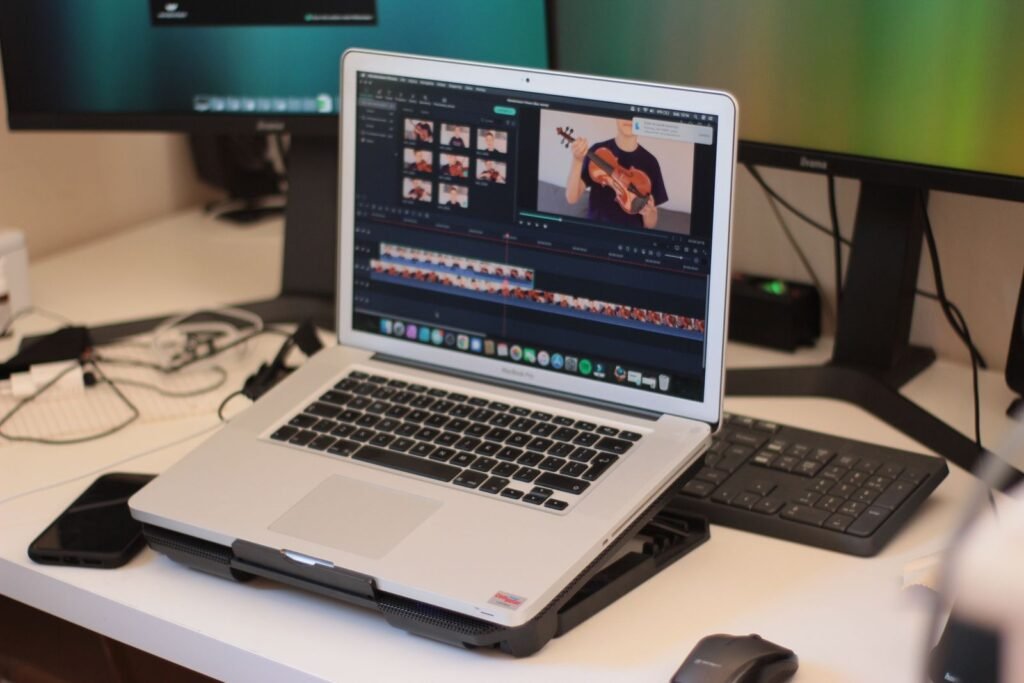
What you actually need (and what it costs)
Here’s the starter kit, with prices from the official pages as of today. One heads-up first: OpenAI’s Sora is gone. The app was discontinued on April 26, 2026, and the API followed in September. If a tutorial tells you to use Sora, it’s out of date.
- Video generation: Runway Standard is $15 a month (625 credits, no watermarks). Pika Starter is $10 a month and includes a commercial license (the free tier doesn’t). Luma Plus is $30 a month with commercial use listed. Google’s AI Pro plan is $19.99 a month with Flow credits and a limited trial of Veo 3.1 Lite.
- Voice: ElevenLabs Starter is $6 a month. Their billing docs say free-plan content is non-commercial with attribution, while paid plans give you commercial rights.
- Editing: CapCut Pro is $19.99 a month with AI credits included. Check its terms for commercial use before you sell anything you make with it.
Notice the pattern? Free tiers usually don’t let you make money with what you create. If you plan to sell, license or monetize, budget for the cheapest paid plan. We’re talking $10 to $35 a month to start, not thousands.
How I’d play it
If I were starting from zero today, here’s the order I’d do it in.
Step one: make one pilot before you buy anything big. Write a 50 to 80 second first episode that ends on a cliffhanger. The PilotRush rules are a free creative brief: vertical 9:16, a strong hook, a reason to watch episode two. Start on one cheap plan. Don’t stack five subscriptions on day one.
Step two: write like a human, because that’s your edge. Viewers spot AI by its robotic gestures, flat voices and lack of emotion. So lean into the stuff AI can’t fake: specific characters with real flaws, dialogue people actually say, and a twist that makes sense. PilotRush’s CEO Yael Tamar said they’re “not looking for AI videos that simply demonstrate what the technology can do.” Neither are viewers.
Step three: use a human voice if you can. PilotRush allowed human voiceover, and honestly, it’s the fastest way to fix the “wooden” problem. If you use an AI voice, use your own cloned voice or a licensed one on a paid plan.
Step four: post it where the algorithm already wants it. YouTube says 40% of microdrama views came more than 30 days after a video went live, so these keep working long after you post. Put your pilot on YouTube Shorts and TikTok, watch the retention, and see where people drop off. That data is your real teacher.
Step five: read the rights language before you enter anything. Look for “non-exclusive” and a clear line saying you keep ownership. If someone wants your whole series forever for a one-time fee, walk away. When Shortical was asked about royalties, the answer was “case by case.” Yours should be in writing.
Step six: watch for the next contest or buyer. PilotRush closed, but the pattern keeps repeating. DramaBox ran a screenwriting competition with Stage 32 with a $5,000 option contract as the prize. TikTok partnered with Sundance on a microseries writing program. Have your pilot ready so you can enter the day one opens.
Step seven: turn the skill into a service. This is the one I’d bet on most. Every local business and online brand needs short vertical video every single week. Your pilot is a portfolio piece that shows you can hook an audience in under a minute. Pair it with a simple funnel and automated follow-up, and the people who watch your work can turn into booked clients while you sleep.

Watch-outs
Your face is an asset. Don’t sell it cheap. A likeness license can outlive the project. Before you sign, get the scope, the length, the payment and the exit spelled out. In California, AB 2602 requires contracts to specify how AI digital replicas of a performer’s voice or likeness will be used. Tennessee’s ELVIS Act creates civil liability for using someone’s voice or likeness without permission. Get a real lawyer for anything that matters. I’m not one.
Never use someone else’s face without consent. In China, a model named Christine Li found her likeness in an AI drama she never agreed to. “I was genuinely shocked. It was clearly me,” she told AFP. The app pulled the series, and then pulled 670 more AI dramas that broke its rules. That’s the fastest way to lose an account, and maybe a lot more.
Don’t confuse the industry’s revenue with your revenue. ReelShort’s marketing costs were 55% of its revenue in 2025, per Screen Daily. The big apps win by spending huge on ads. A solo creator can’t outspend them, so don’t try. Win on story, speed and services.
Be skeptical of anyone selling the dream. If a course promises you’ll make thousands a month from AI dramas, ask for proof. The data above says most series don’t break through. Learning the skill is the safe bet. “Getting rich off one viral series” isn’t.
Quick answers
Do I need to be on camera? No. That’s the point. AI handles the visuals. You handle the story.
How much does it cost to try? Based on the pricing pages above, you can test with one paid plan for $10 to $35 a month. TheWrap made four episodes for about $150 in credits.
Can I make money directly from views? Possibly, through YouTube’s Partner Program or platform programs, but don’t count on it early. Contests, script sales and client work are more direct paths right now.
The bottom line
AI microdramas are a real market with real money moving through it, and the big players are lining up for the U.S. audience. But most of that money isn’t reaching individual creators yet, and most AI series still can’t find viewers.
So treat this like a low-cost skill to test, not a business to bet the house on. Make one episode. Learn what holds attention. Protect your rights. And keep building income you control while the industry figures out who gets paid.
Make the pilot. Keep the rights. That’s the play.
And if you want the backend to turn that skill into actual paying clients, with funnels, follow-up and text-to-pay in one place, that’s exactly what we built at TheAmericanSideHustle.com. Earn in USD. Live anywhere.
Tools I’d use for this
- ElevenLabs: realistic AI voiceovers for videos, podcasts and audiobooks.
- Descript: edit video and podcasts by editing the transcript.
- Kit: email marketing built for creators, with digital product sales built in.
Some of these are affiliate links. If you sign up through them we may earn a commission, at no extra cost to you. See all our picks on the Recommended Tools page.
Photos: Ron Lach, RDNE Stock project and Adam Sondel on Pexels. Graphics: The American Side Hustle. Prices checked on official pages Nov. 24, 2026, and may change.
Ready to build your own American side hustle?
Get funnels, automated follow-up, text-to-pay and courses in one dashboard. Earn in USD, live anywhere.